From problem to product in 4 hours
Designed, built & tested at a real live show

The problem
I was playing a live show and needed a simple way to keep everything I needed on stage in one place.
Lyrics were in one place, chords somewhere else, Spotify in another app, and I still needed to remember the key, capo position and the order of the setlist.
Switching between all of that while performing meant spending mental energy on logistics instead of the music.
So I decided to build the tool I wanted to use myself.
The idea
I imagined a stage-first interface where a musician could open one screen and immediately know:
What song comes next
Lyrics
Chords
Key
Capo position
BPM
Spotify reference
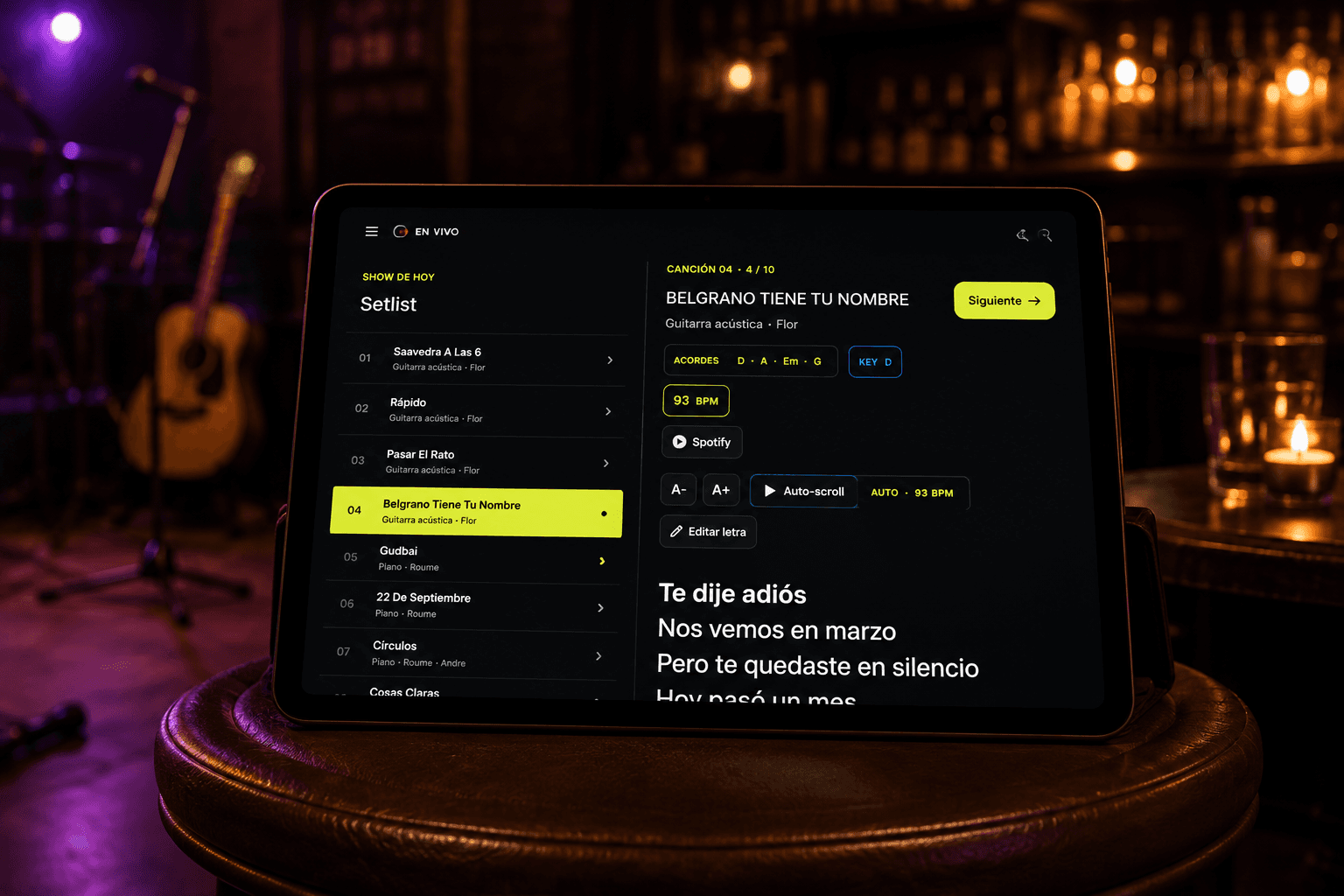
The setlist could also be shared with the other musicians so everyone could follow the same running order.
Because it would be used during a performance, readability and speed became the main design constraints. Information had to be understandable at a glance, from a tablet or laptop, in a dark environment.
From idea to working product in 4 hours
Instead of stopping at a Figma prototype, I used vibe coding with ChatGPT Cowork to turn the idea into a functional web product.
I described the experience, logic and interactions in natural language, iterated on the interface, tested it and refined the product as I built it.
In approximately 4 hours, I went from a problem I had that day to a working product I could actually take with me to the show.
Designing for the stage
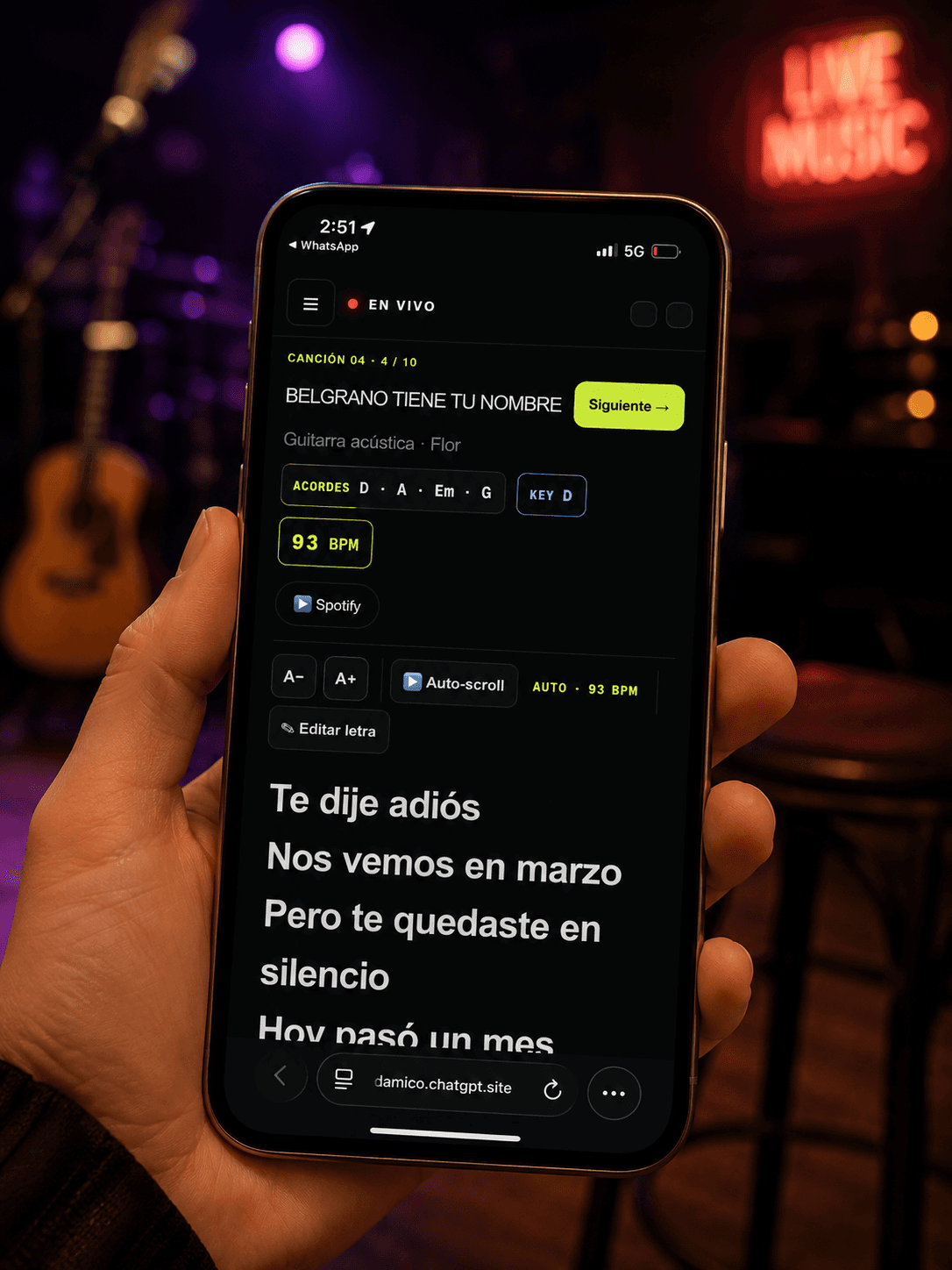
The interface uses high contrast, oversized typography and bright visual cues so the most important information can be recognized quickly.
I added a dedicated live mode with lyrics, chords, key and BPM, plus controls for text size and auto-scroll.
Spotify is accessible directly from the song, while the setlist makes moving between songs fast and predictable.
The experience was designed responsively so it could work across laptop, tablet and mobile.
Testing it in the real world
A few hours after building the first version, I took it to the show.
I placed my tablet horizontally on a chair next to me and used Escenario throughout the performance.
Instead of wondering where to put the capo, trying to remember lyrics or thinking about which song came next, the information was already there.
That meant less cognitive load, less stress and more attention on actually performing.
What I learned
This project changed the way I think about prototyping.
AI-assisted building allows me to go beyond demonstrating how a product could work. I can build something functional, put it in front of real users — or become the first user myself — and learn from actual usage much earlier.
For me, vibe coding is becoming another tool in the product design process: identify a problem → design the experience → build it → use it → learn → iterate.
Built in 4 hours. Tested on stage the same day.