The Challenge
Cardiovascular diseases remain one of the leading causes of death globally, yet early detection of irregular heart activity is often difficult outside of clinical settings.
The goal of this project was to create an accessible, real-time ECG monitoring system that detects anomalies and alerts users before critical events occur.
Our Approach
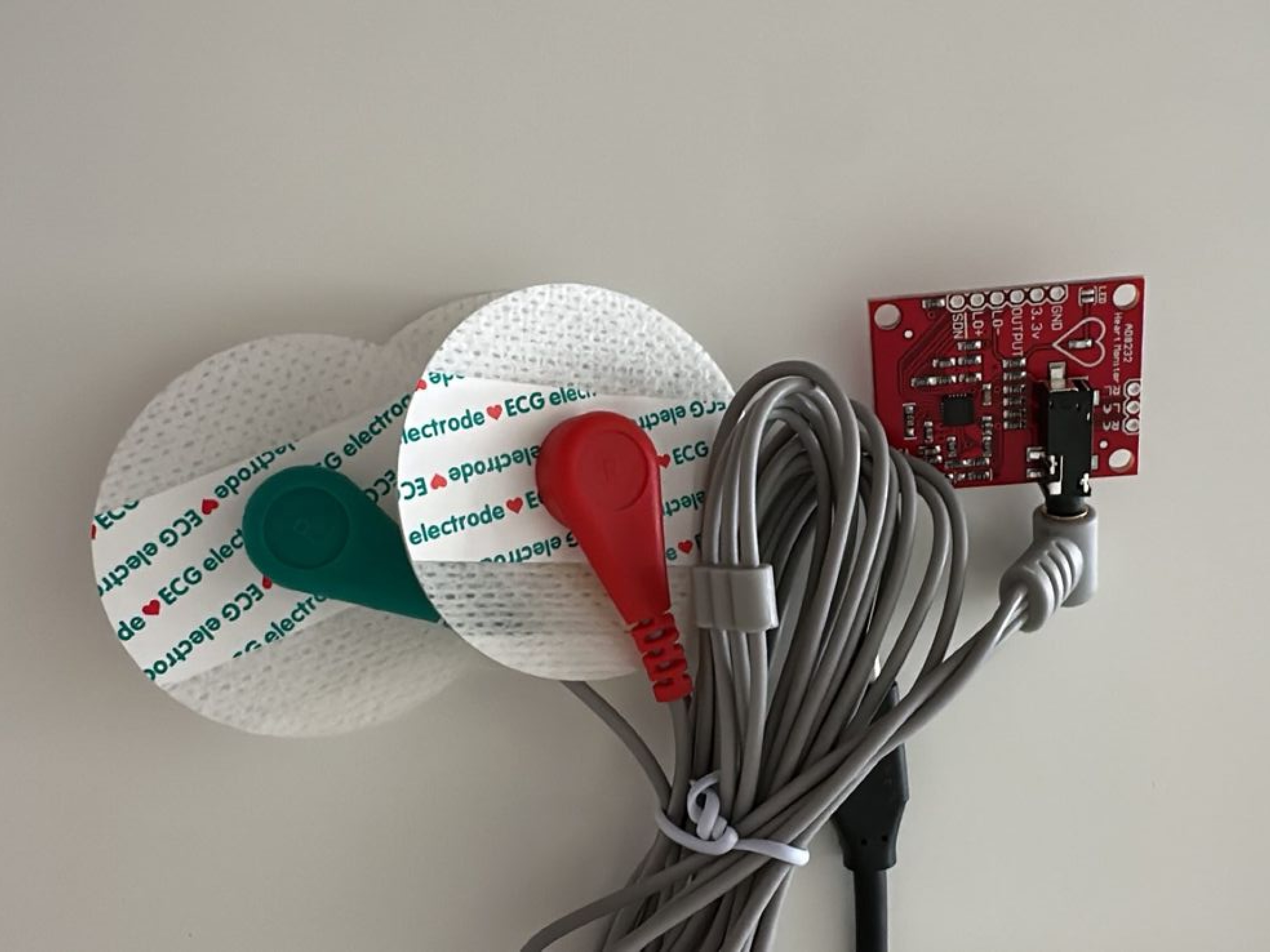
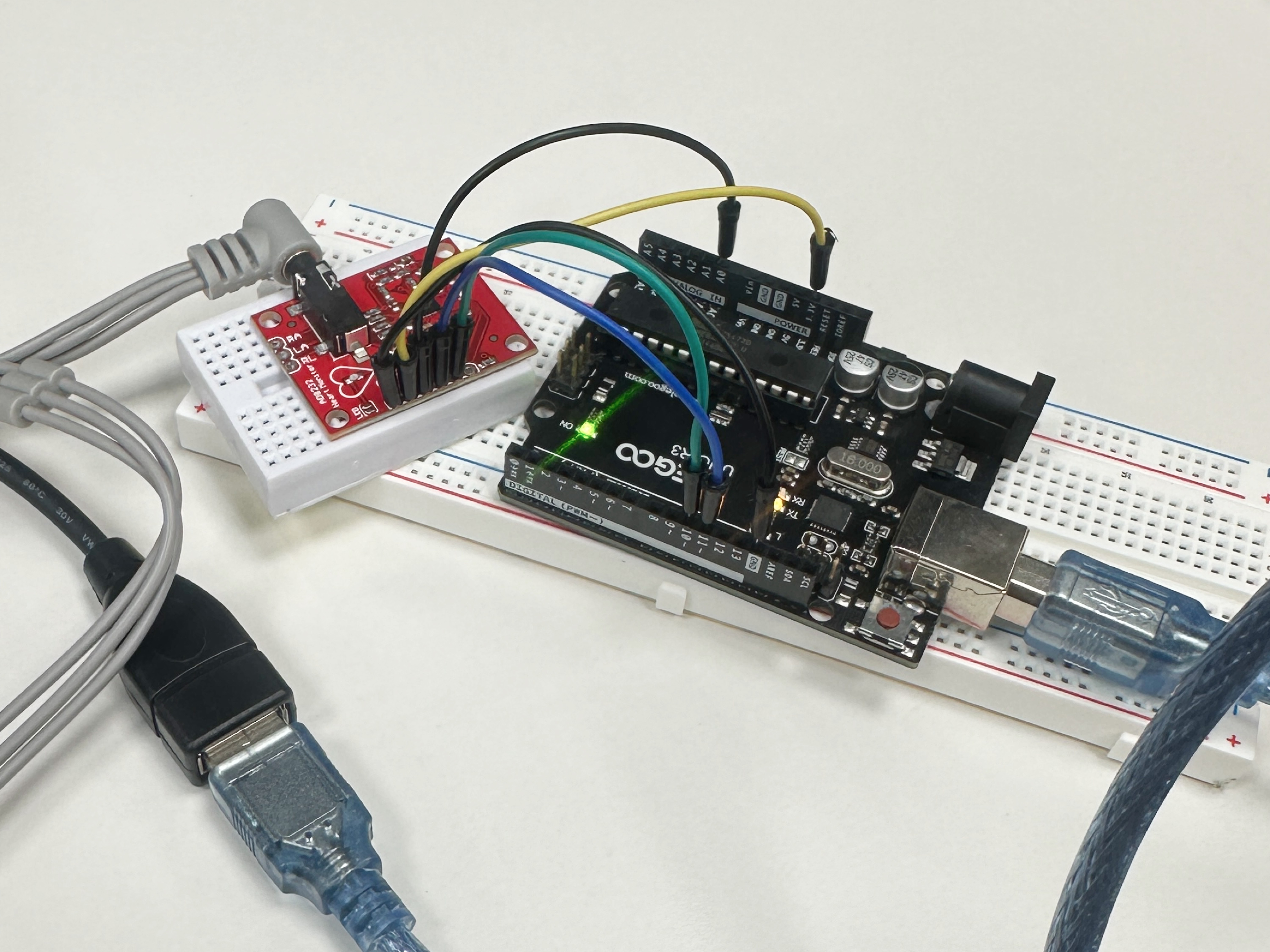
We developed a low-cost wearable prototype using an AD8232 ECG sensor connected to an Arduino board.
The data was streamed live to a web dashboard built with p5.js, which visualizes heartbeat signals and detects abnormalities based on threshold patterns.
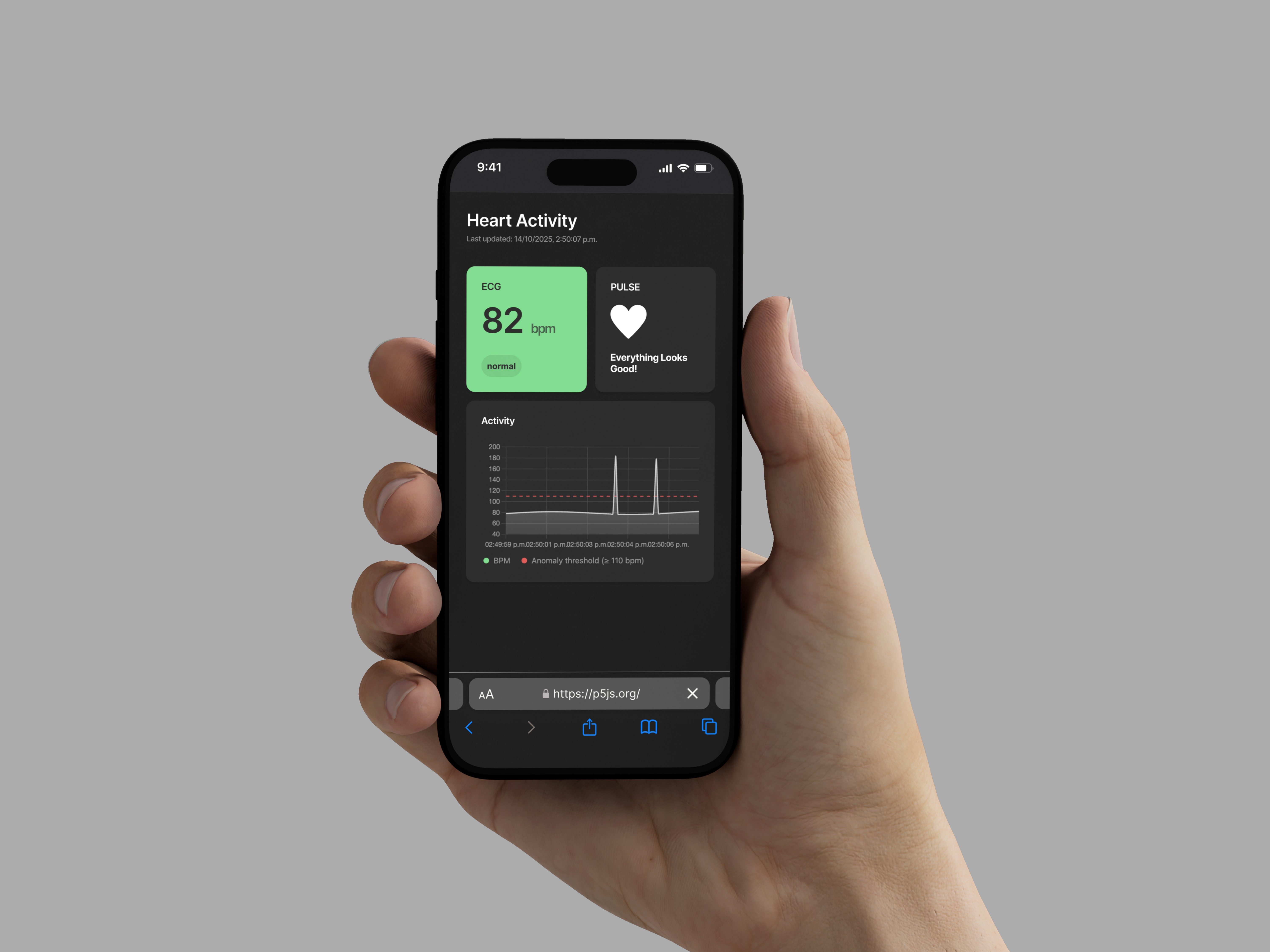
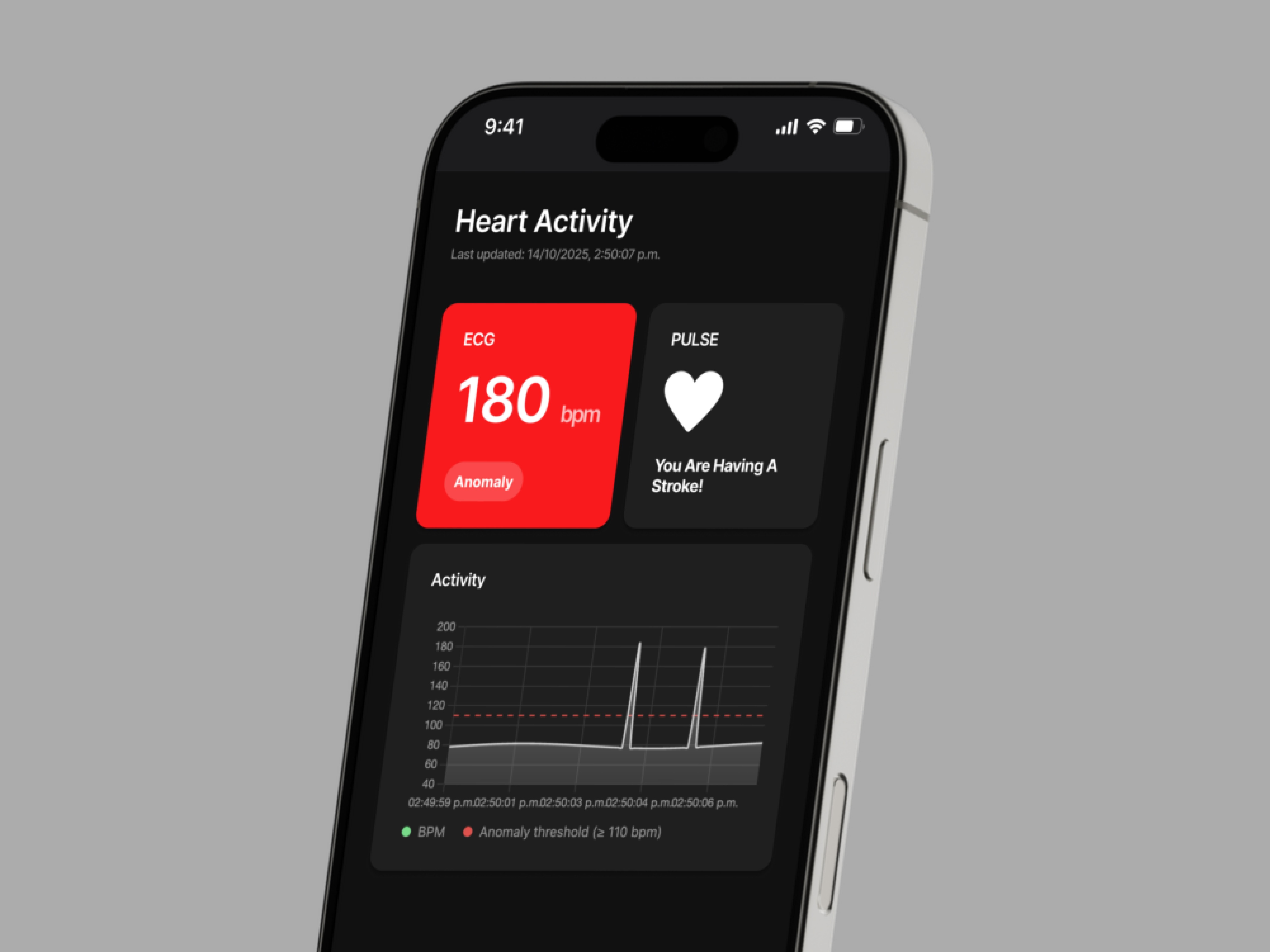
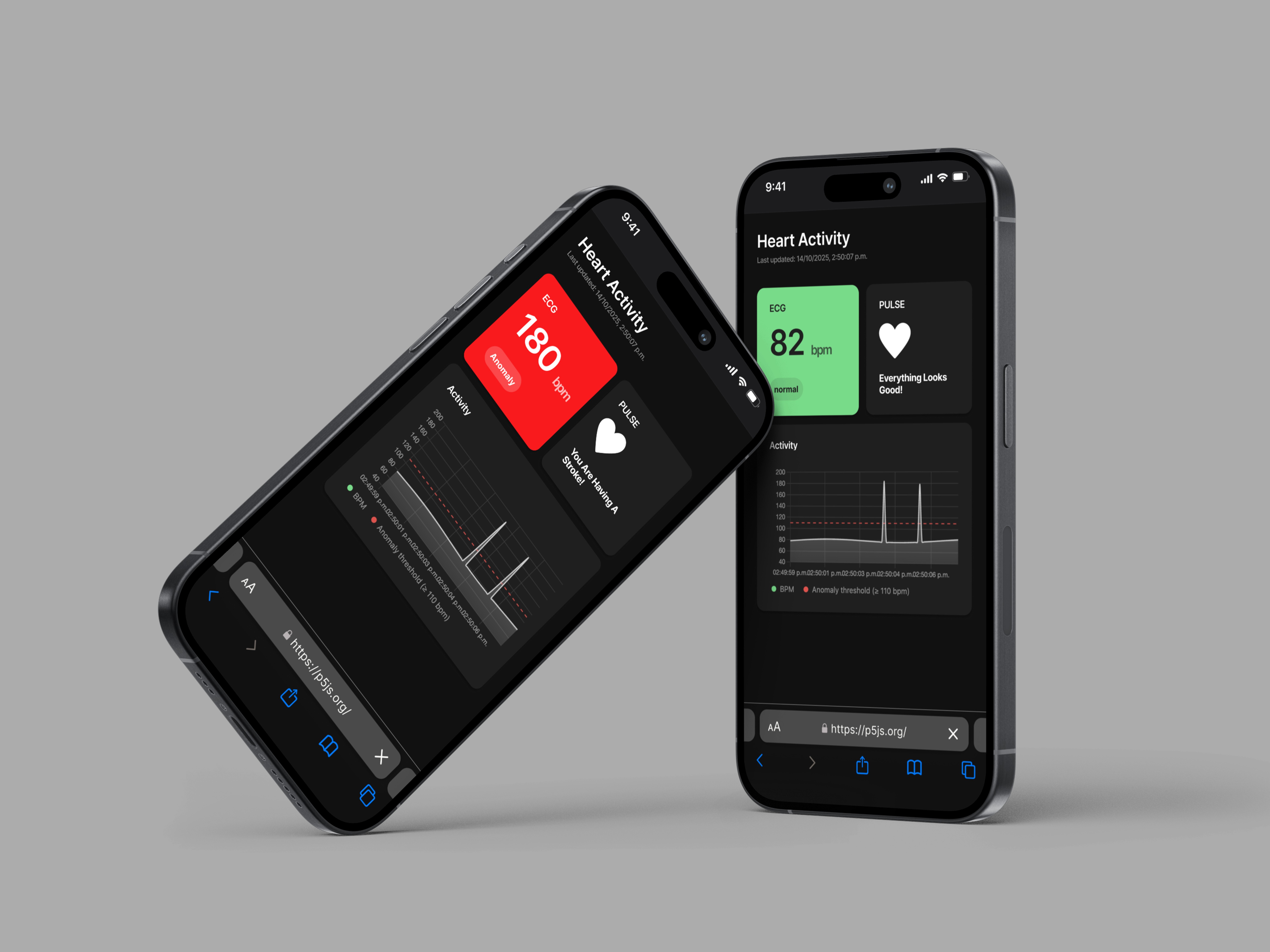
The interface was designed for both desktop and mobile, offering real-time feedback and color-coded alerts:
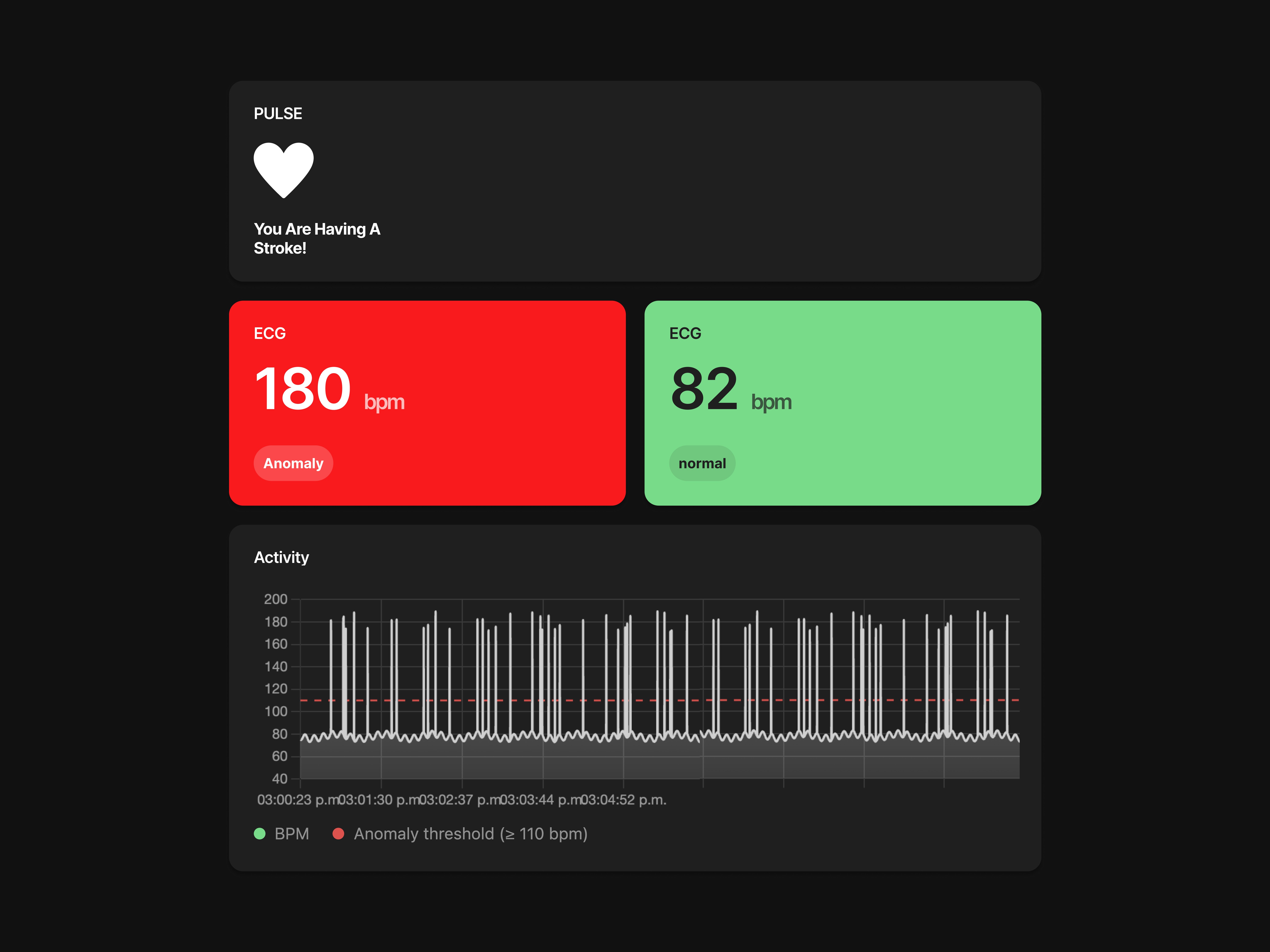
🟩 Normal: Stable rhythm (≈ 60–90 bpm)
🟥 Anomaly: Irregular peaks or extreme heart rate (>110 bpm)
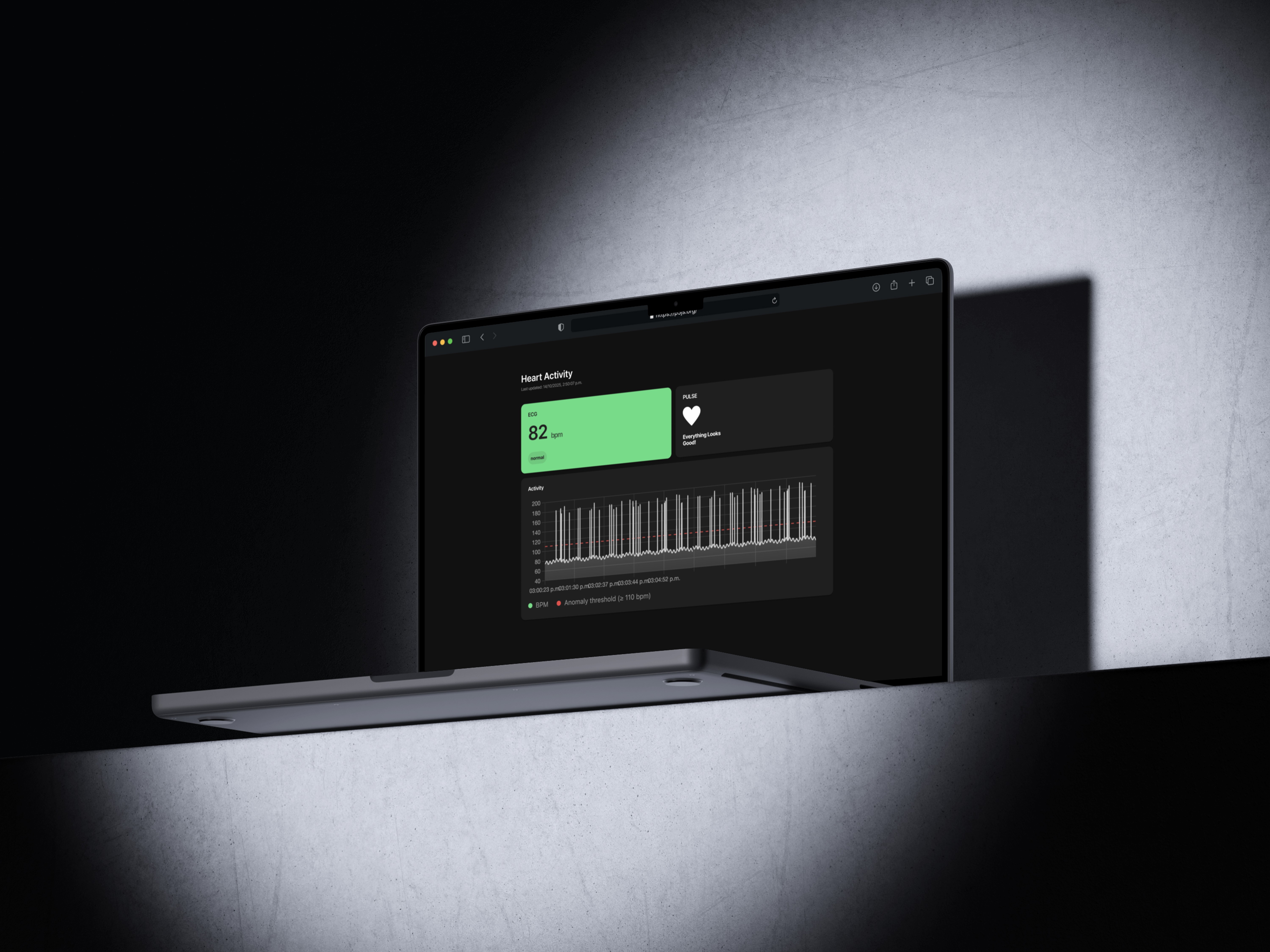
Solution: Heart Activity Dashboard
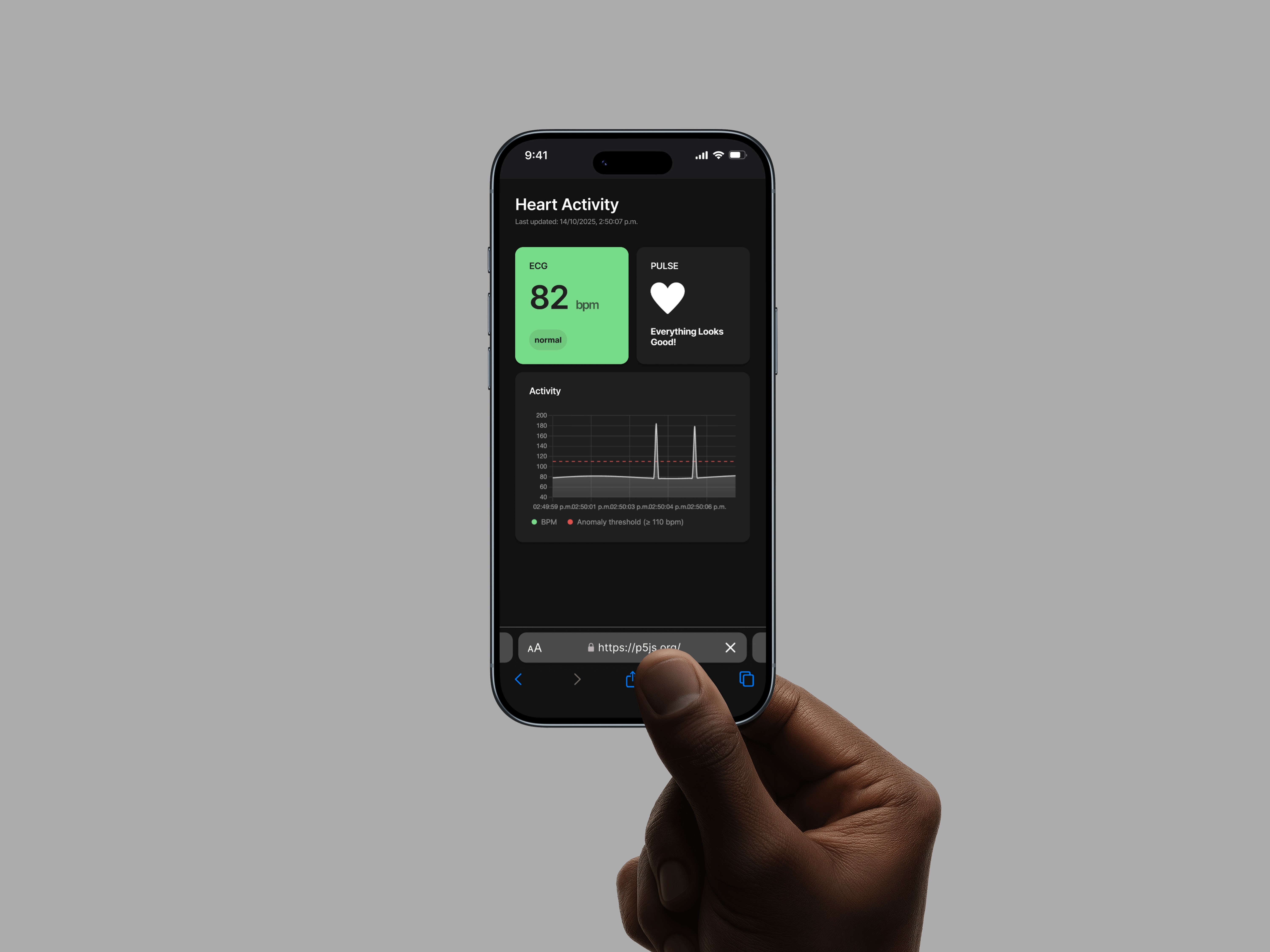
The dashboard displays:
ECG Readings – Beats per minute (BPM) visualized in real time
Pulse Indicator – Animated feedback with color-coded state
Activity Graph – Dynamic line chart for recent heart activity
🔗 Live demo: p5.js prototype
Prototype Workflow
ECG electrodes capture analog heart signals.
The AD8232 board amplifies and filters the signal.
Data is processed through Arduino, transmitted via serial port.
A p5.js visualization converts raw data into interactive metrics.
Results
Real-time monitoring of ECG signals directly from the body
Automatic anomaly detection with instant visual feedback
Cross-platform UI accessible on laptop, phone, and smartwatch mockups
This project demonstrates how human–computer interaction, IoT, and data visualization can empower preventive healthcare through design and accessible technology.